

LED light therapy has become a popular option for people looking for a gentle way to care for their skin. Unlike treatments that exfoliate, peel or puncture the skin, LED therapy uses controlled light to support natural processes within the skin.
But what exactly happens when light is applied to the skin? And is it suitable for everyone?
LED stands for Light Emitting Diode. In skincare, LED devices use specific wavelengths of light that can interact with cells in the skin. Different wavelengths are used for different treatment goals, which is why you may hear about blue, red, yellow and green LED light.
Research into LED therapy has explored applications including acne, skin rejuvenation and other skin concerns. The results can depend on the wavelength, treatment settings, number of sessions and individual skin characteristics.
What Is LED Light Therapy?
So, what is LED light therapy?
LED light therapy is a non invasive treatment that uses specific wavelengths of light to interact with the skin. It is also commonly discussed under the broader term photobiomodulation.
Unlike ultraviolet light, LED treatments use controlled wavelengths that are intended for specific purposes. The light does not work by removing the surface layer of skin. Instead, certain wavelengths can interact with cellular components and influence biological processes within the treated area.
A 2025 evidence based consensus on photobiomodulation described it as a generally safe treatment modality for adults when used appropriately, while also highlighting the importance of suitable treatment parameters.
This makes LED therapy different from treatments such as chemical peels, laser resurfacing and IPL. Each technology works differently and has its own potential uses.
How Does LED Light Therapy Work?
During an LED light therapy treatment, a device delivers a selected wavelength of light to the skin for a controlled amount of time.
The light can be absorbed by components within cells, which may influence cellular signalling and other biological processes. Researchers have studied these effects in relation to inflammation, tissue repair, collagen related processes and skin rejuvenation.
The important point is that different wavelengths do not all have the same effect.
Blue light, for example, is commonly investigated for acne. Red light is more commonly associated with skin rejuvenation and photobiomodulation. Yellow and green wavelengths have also been studied, although the evidence and treatment applications for these wavelengths are less established.
The treatment settings also matter. Wavelength, intensity, exposure time and treatment frequency can all influence how the skin responds.
Blue LED Light Therapy
Blue LED light therapy is particularly well known for its use in acne focused skincare.
Blue light can interact with certain bacteria associated with acne, which is one reason it has been investigated as a treatment option for inflammatory pimples.
The American Academy of Dermatology notes that visible blue and red light devices can help treat pimples, although light treatments do not generally address every type of acne lesion. Results also vary between individuals, and multiple treatments are often needed.
For someone experiencing occasional or mild acne concerns, blue LED may be considered as part of a broader skincare approach. More persistent or severe acne may require assessment by a medical professional.
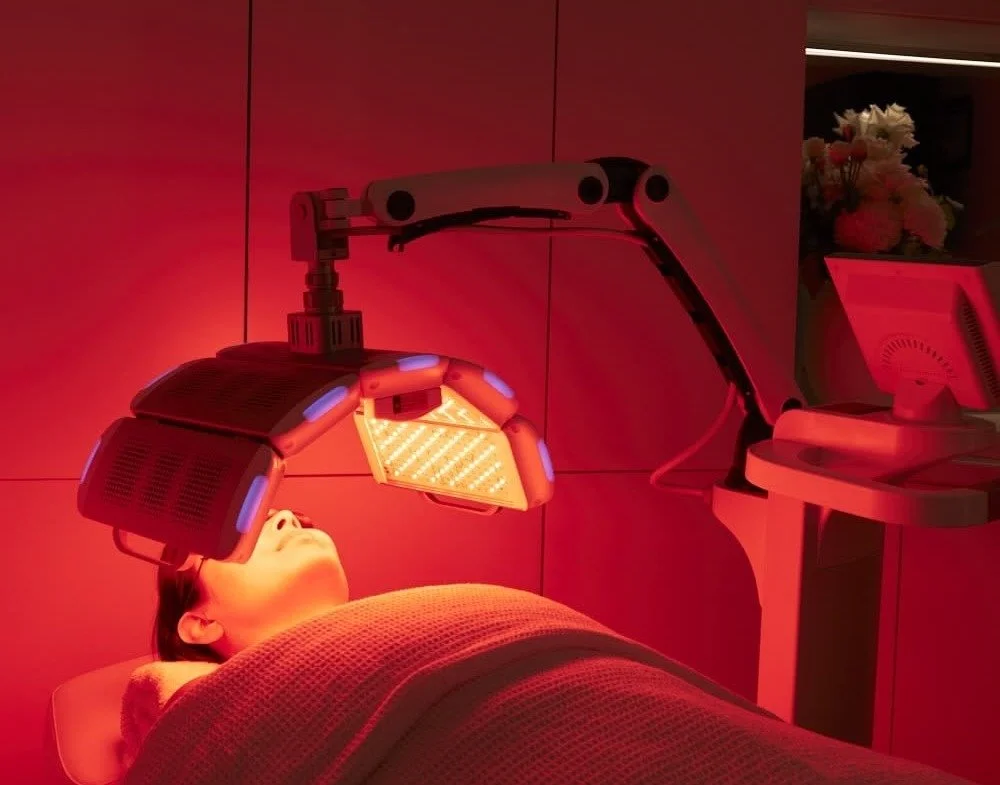
Red LED Light Therapy
Red light is commonly associated with skin rejuvenation and photobiomodulation.
Research has investigated red light for its potential influence on cellular activity, inflammation and processes associated with skin repair. It is also commonly used in treatments designed to support the appearance of ageing skin.
A person may consider red LED when they are concerned about dull looking skin, fine lines or overall skin appearance. However, results are generally gradual and vary between individuals.
Red light therapy is not designed to produce the same type of resurfacing effect as a laser or chemical peel. Instead, it works through a different biological mechanism.
Yellow LED Light Therapy
Yellow LED light therapy uses a different wavelength range from blue and red light.
Yellow light has been investigated for its potential applications in skin rejuvenation, inflammation and other cosmetic skin concerns. A recent review of LED applications in cosmetic dermatology identified yellow light among the wavelengths being studied for aesthetic uses.
However, it is important not to assume that yellow light will automatically correct a particular skin concern. Evidence can vary depending on the condition, wavelength, device and treatment protocol.
A professional consultation can help determine whether this type of light is appropriate for your skin.
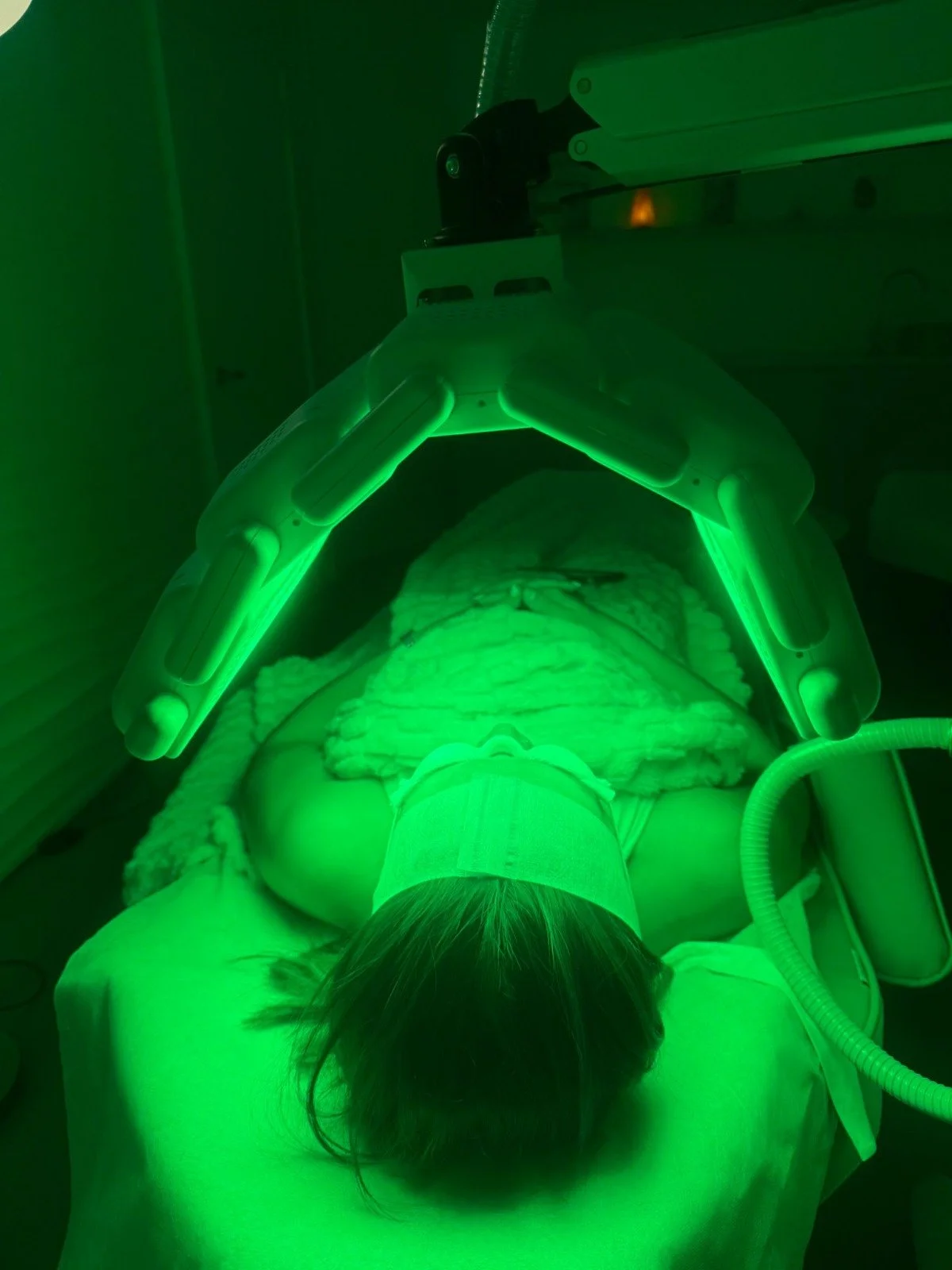
Green LED Light Therapy
Green LED light therapy is another wavelength used by some LED systems.
Green light has attracted interest in relation to pigmentation and overall skin appearance. However, research into specific green LED protocols is still developing, so it is better to view it as one possible component of a personalised skincare approach rather than a guaranteed solution for pigmentation.
Pigmentation can have many causes, including sun exposure, hormonal changes and inflammation. The most appropriate treatment depends on the underlying cause.
What Can LED Light Therapy Help With?
LED therapy is used for a range of cosmetic skin concerns. Depending on the wavelength and treatment protocol, it may be incorporated into a skincare plan for:
• Acne prone skin
• Dull looking skin
• Uneven skin appearance
• Signs of ageing
• Skin redness and inflammation
• Skin recovery
• General skin rejuvenation
Evidence is strongest for some applications and less established for others. A systematic review and meta analysis of LED skin therapies found evidence for the use of red and blue LED in acne, while also identifying promising findings for some other LED wavelengths and skin applications.
This is why professional guidance can be helpful when choosing a treatment.
What Happens During an LED Light Therapy Facial Treatment?
An LED light therapy facial treatment is generally a straightforward procedure.
The skin is cleansed and prepared before the LED device is positioned over the treatment area. Your practitioner selects the appropriate light and treatment settings based on the treatment plan.
The light is then applied for a set period.
Most people find LED therapy comfortable. You may notice gentle warmth during the session, but there is generally no need for needles or significant skin resurfacing.
Unlike some stronger cosmetic procedures, LED therapy typically does not require significant downtime. However, your practitioner should provide specific advice based on the device and treatment being used.
How Many LED Light Therapy Treatments Do You Need?
There is no single number of sessions that works for everyone.
Your recommended treatment schedule can depend on your skin concern, the wavelength being used and how your skin responds.
For acne, the American Academy of Dermatology notes that several light treatments are often needed to see results. It also points out that results can vary considerably between people.
For skin rejuvenation, LED treatments are often used as part of a series rather than as a one time procedure.
Consistency is important, but more treatment is not necessarily better. A suitable treatment schedule should be based on the equipment, protocol and individual skin needs.
Is LED Light Therapy Safe?
LED therapy is generally considered a gentle, non invasive treatment when appropriate devices and treatment settings are used.
Research into photobiomodulation has found a generally favourable safety profile, although side effects and individual responses can vary.
Some people may experience temporary warmth, mild irritation or sensitivity.
It is also important to tell your practitioner about medications or conditions that may make your skin more sensitive to light. People with particular skin concerns or medical conditions may require additional assessment before treatment.
If you are considering an at home LED device, professional advice can also be useful. The American Academy of Dermatology recommends discussing red light therapy with a dermatologist because these treatments are not appropriate for everyone.
LED Light Therapy at Sculpt Body and Wellness Clinics
At Sculpt Body and Wellness Clinics, LED light therapy treatment is available at our St Kilda and Chapel Street clinics. Our team can discuss your skin concerns and help you understand which LED treatment may be suitable for your individual needs.
Whether you are interested in blue LED light therapy, red light for skin rejuvenation, yellow LED light therapy or green LED light therapy, our team can explain the treatment process and what you may realistically expect from your sessions.
If you are considering an LED light therapy facial treatment, you can contact us to learn more about the treatment and availability at your preferred clinic.
St Kilda
• Address: Shop F4C Acland Court, 158 Acland Street, St Kilda VIC 3182
• Phone: 0489 274 952
• Opening Hours: Monday to Saturday, 10am to 3pm
Chapel Street
• Address: Pran Central Shopping Centre, 325 Chapel Street, Prahran, VIC 3181
• Phone: 0489 274 952
• Opening Hours: Monday to Saturday, 9am to 5pm
Contact Us
Interested in LED light therapy for your skin? Contact Sculpt Body and Wellness Clinics on 0489 274 952 to ask about treatment availability, discuss your skin concerns and arrange a consultation at our St Kilda or Chapel Street clinic.
Frequently Asked Questions
1. What is LED light therapy?
LED light therapy is a non invasive skin treatment that uses specific wavelengths of light to interact with the skin. Different wavelengths may be selected for different cosmetic treatment goals.
2. How does LED light therapy work?
LED light reaches the skin at controlled wavelengths and can interact with cellular components. Research has investigated its effects on processes related to cellular activity, inflammation, repair and skin rejuvenation.
3. What is blue LED light therapy used for?
Blue LED light therapy is commonly used for acne focused treatments. Blue light can target certain bacteria associated with acne and may help reduce inflammatory pimples. However, it does not treat every type of acne and results can vary.
4. What is an LED light therapy facial treatment?
An LED light therapy facial treatment uses selected wavelengths of light on the facial skin. It is generally comfortable and does not involve needles or significant skin resurfacing.
5. What is yellow LED light therapy?
Yellow LED light therapy uses a specific range of visible light that has been investigated for cosmetic skin applications. Its suitability depends on the treatment system, skin concern and individual needs.
6. What is green LED light therapy?
Green LED light therapy uses green wavelengths that have been explored for cosmetic skin concerns including pigmentation and skin appearance. More research is needed to establish the most effective protocols for individual concerns.
7. Is LED light therapy painful?
Most people find LED therapy comfortable. You may experience gentle warmth during treatment, but there is generally no significant discomfort.
8. How often should I have LED light therapy?
The recommended frequency depends on the treatment goal, device and individual response. A practitioner can recommend a suitable schedule based on your skin and the treatment protocol.
Final Thoughts
Understanding what is LED light therapy can help you decide whether it may be suitable for your skincare goals.
LED therapy uses controlled wavelengths of light to interact with the skin and support natural cellular processes. Blue, red, yellow and green wavelengths have different properties, which is why the choice of light should be based on the intended treatment rather than simply choosing a colour.
While LED therapy is gentle and convenient, it is important to have realistic expectations. Results can vary, and some skin concerns may require other professional treatments or a combination approach.
